Nissan to Continue Gas-Powered Juke Sales Amid EV Transition
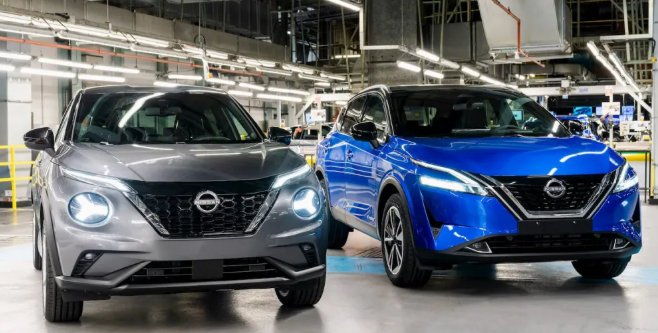
Nissan is set to continue selling the gas-powered version of its Juke SUV even as it invests £3 billion (~$3.9 billion) to electrify its Sunderland, UK plant. While the automaker plans to roll out electric versions of its top-selling models—LEAF, Qashqai, and Juke—the continued sale of the internal combustion engine (ICE) Juke reflects concerns about uneven EV demand and regulatory uncertainty in parts of Europe.
The electric LEAF is scheduled to launch later this year, followed by the Juke EV in 2026 and Qashqai EV in 2027. However, recent reports suggest delays and scaled-back production plans, with Nissan reportedly cutting back on 2026 LEAF production and delaying EV rollouts in the U.S. at its Canton, Mississippi plant.
Meanwhile, Nissan may retain the Juke with a hybrid powertrain option, similar to the e-POWER hybrid system recently introduced in the new Qashqai. This powertrain uses a gas engine to generate electricity for an electric motor that drives the wheels, offering fuel efficiency of 4.5L/100 km and a range of up to 1,200 km (WLTP).
As Nissan faces growing EV competition and evolving market dynamics, it appears to be hedging its bets by maintaining popular ICE and hybrid offerings alongside its electrification efforts.
The electric LEAF is scheduled to launch later this year, followed by the Juke EV in 2026 and Qashqai EV in 2027. However, recent reports suggest delays and scaled-back production plans, with Nissan reportedly cutting back on 2026 LEAF production and delaying EV rollouts in the U.S. at its Canton, Mississippi plant.
Meanwhile, Nissan may retain the Juke with a hybrid powertrain option, similar to the e-POWER hybrid system recently introduced in the new Qashqai. This powertrain uses a gas engine to generate electricity for an electric motor that drives the wheels, offering fuel efficiency of 4.5L/100 km and a range of up to 1,200 km (WLTP).
As Nissan faces growing EV competition and evolving market dynamics, it appears to be hedging its bets by maintaining popular ICE and hybrid offerings alongside its electrification efforts.